

Beyond School
Beyond School
Center for Belonging
At St. James’, every child is known, supported, and loved. Because children (and adults alike) have moments that feel overwhelming, the Center for Belonging provides a safe space where students can go when time is needed to reflect, regain equilibrium before moving forward, navigate big feelings, and socialize with like-minded peers.
The Center for Belonging is an integral part of St. James’ culture in which emotions are acknowledged with kindness and respect. Run by the Dean of Students and Belonging, it is a place that helps children develop a sense of self-worth and resilience as well as positive relationships and compassion for others.
Our sense of belonging can never be greater than our level of self-acceptance.
— B. Brown
How does it work?
Open throughout the school day, the Center for Belonging is a popular destination for students who are looking for an option away from the field and black top during recess and lunch. It also serves as a resource for teachers who may need to direct a student to the Dean of Students, who is based in the Center for Belonging, in order to minimize classroom disruption.
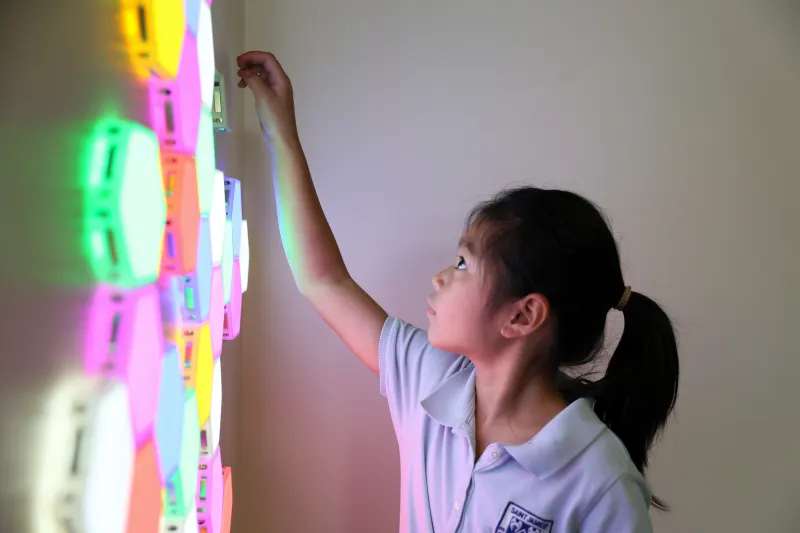
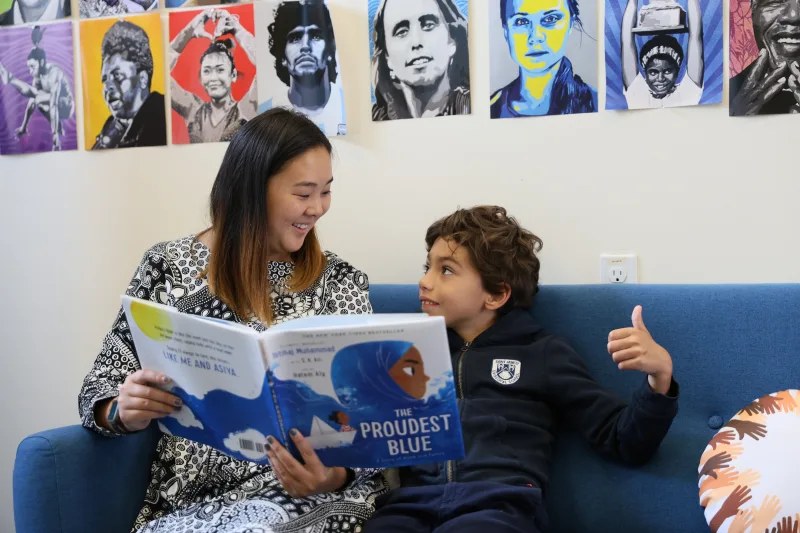
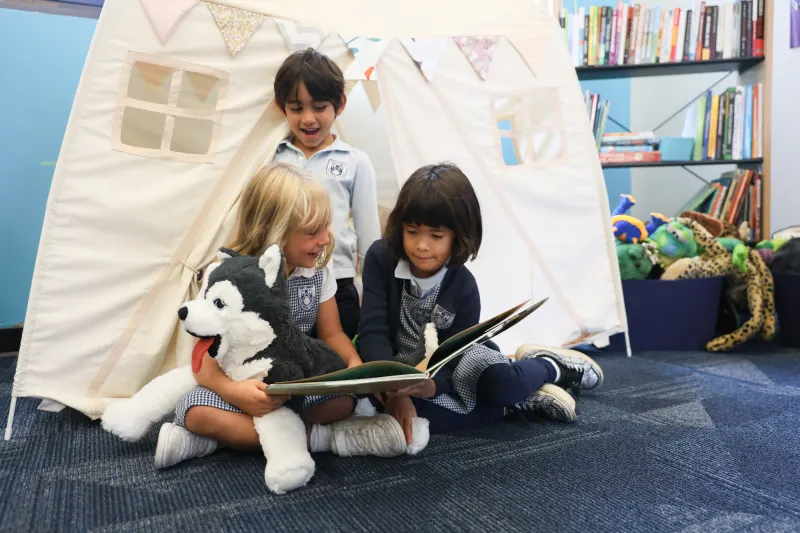
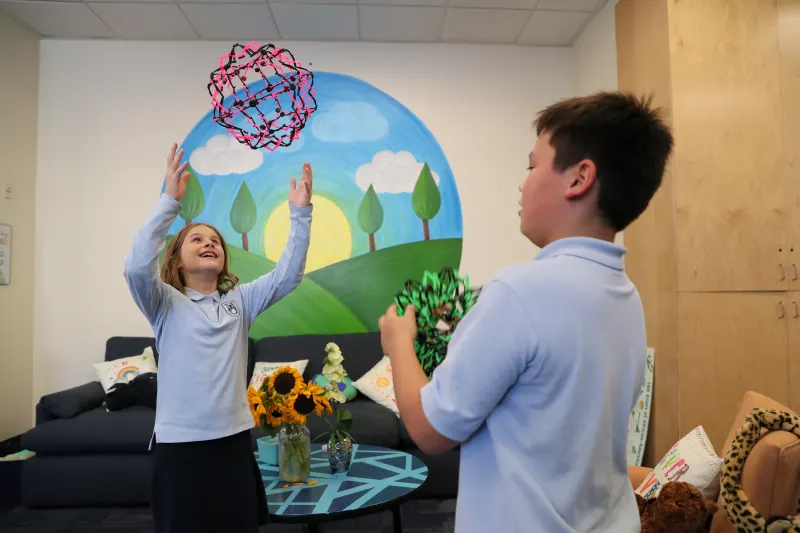
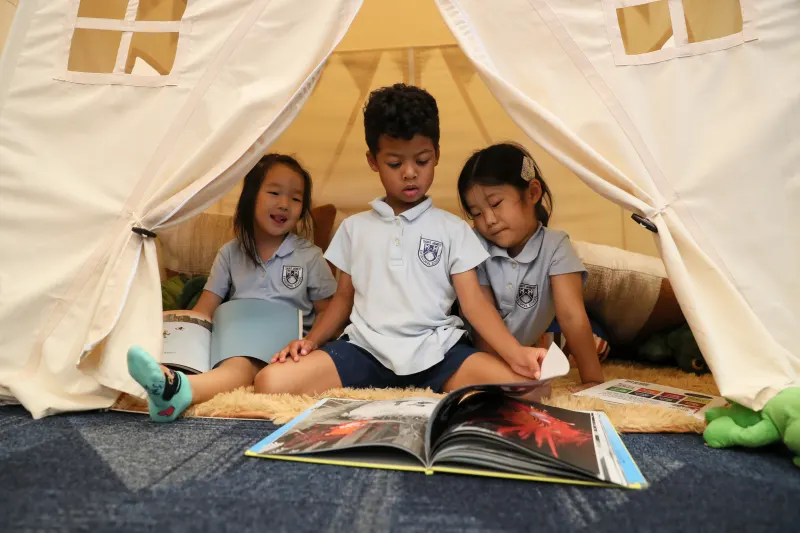
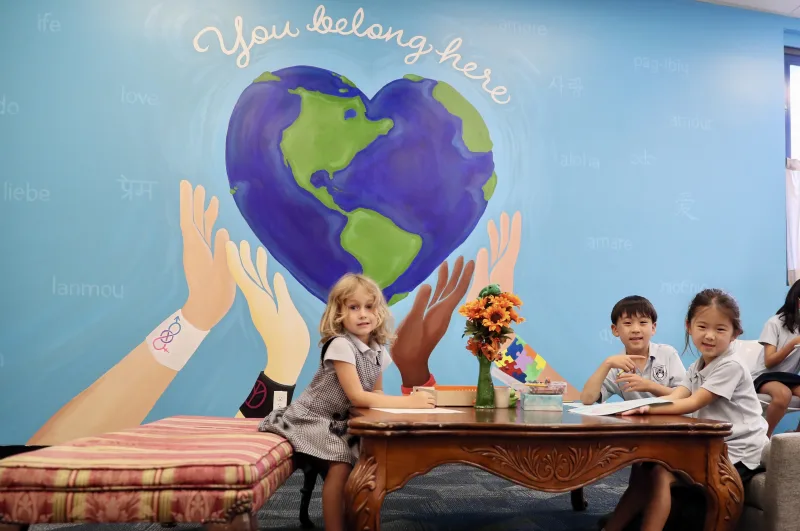
The space inside the Center for Belonging has been thoughtfully designed to offer different areas based on a child’s needs. Its’ universal design principles welcome all students, reflecting the diverse racial, ethnic, gender, and neurodiverse makeup of our student body. The touch sensory lights and floor dots for brain break hopscotch help an overstimulated child to calm their senses while other spaces provide art supplies, drums, spin chairs, egg chairs, blankets, pillows and a reading nook.
RULER - A self-awareness tool
The Center for Belonging incorporates aspects of an approach to social-emotional learning known as RULER, a tool for self-awareness and self-regulation developed at the Yale Center for Emotional Intelligence. Created for the preK-12 school level, RULER stands for Recognizing, Understanding, Labeling, Expressing, and Regulating emotions, the primary elements of emotional intelligence. Learning how to recognize, express, and move between such feelings is a skill that enables students and teachers to maintain the positive emotional atmosphere that is necessary for engaged learning and for all aspects of a child’s growth.
Recognizing emotions in oneself and others
Understanding the causes and consequences of emotions
Labeling emotions with a nuanced vocabulary
Expressing emotions in accordance with cultural norms and social context
Regulating emotions with helpful strategies
What does belonging look, feel, and sound like for you?


